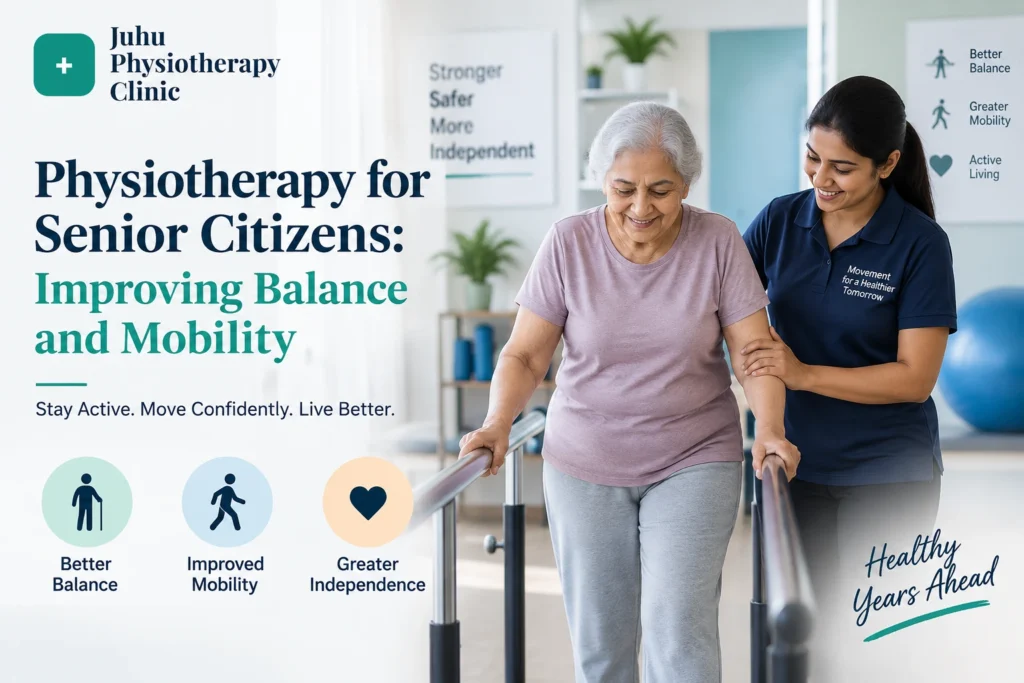
Recovery from injury, surgery, or a chronic condition is rarely straightforward — and for many patients, the challenge isn’t just physical. Getting to a clinic multiple times a week requires transport, energy, and time that some people simply don’t have. For the elderly, post-surgical patients, or anyone managing significant pain or mobility limitations, travelling to appointments can itself become a source of stress that interferes with healing.
Home physiotherapy addresses this directly. By bringing professional care to the patient rather than the other way around, it removes one of the most consistent barriers to consistent, effective rehabilitation.
What Home Physiotherapy Actually Involves?
A home visit physiotherapy session is not a scaled-down version of clinic care. A qualified physiotherapist arrives at your home with the assessment tools and therapeutic equipment needed to conduct a full evaluation and treatment session. They assess your movement, strength, and functional limitations in the environment where you actually live — which provides clinical insights that a clinic setting often can’t replicate.
Seeing how a patient moves through their home, navigates stairs, gets up from their usual chair, or manages their bedroom and bathroom layout gives a physiotherapist information that directly shapes the treatment plan. Exercises are prescribed in the context of what’s actually achievable and relevant in that space, making the programme far more practical to follow.
Who Benefits Most From Home Visits?
Post-surgical patients
The period immediately following surgery is when consistent physiotherapy has the greatest impact on long-term outcomes — and it’s also when travelling to a clinic is most difficult. Patients recovering from knee replacement, hip replacement, ACL surgery, or spine surgery are often managing pain, restricted weight-bearing, and limited independence in the early weeks. Home visits allow rehabilitation to begin promptly without the patient having to manage transport before they’re physically ready for it.
Elderly patients
Older adults often face a combination of mobility limitations, chronic pain, and reduced confidence navigating unfamiliar environments. Elderly care home physiotherapy provides a safe, familiar setting for treatment and allows the physiotherapist to assess fall risks, home layout, and functional independence in a way that’s directly applicable to daily life. For elderly patients, the home environment isn’t just convenient — it’s clinically the most relevant place to be assessed and treated.
Patients with chronic pain or significant mobility limitations
For anyone whose condition makes sustained travel painful or exhausting, home visit physiotherapy reduces the physical cost of accessing care. This is particularly relevant for patients managing conditions like sciatica, arthritis, or chronic back and neck pain, where a long commute and time spent in waiting rooms can flare symptoms before treatment even begins.
Those requiring privacy and discretion
For public figures and professionals who require complete privacy in their healthcare, private home physiotherapy provides clinical-quality care in a fully confidential setting.
The Comfort Advantage: More Than Convenience
The comfort of being at home has a measurable effect on recovery outcomes, not just on patient satisfaction. There are several reasons for this.
Reduced anxiety and better engagement. Many patients — particularly those dealing with significant pain or emotional stress following surgery or injury — feel more at ease in their own space. Lower anxiety levels translate to better participation in exercises, more honest communication with the physiotherapist, and a more accurate baseline assessment.
Consistent exercise environment. When exercises are prescribed and practised in the actual space where the patient will perform them independently, compliance improves. There’s no translation required between what was demonstrated in a clinic and what’s possible at home.
Immediate functional application. A physiotherapist working in your home can address real functional goals — getting in and out of the shower safely, climbing your specific staircase, returning to your preferred sleeping position — in real time. This functional specificity is one of the most underappreciated advantages of home-based care.
Conditions Commonly Treated at Home
Home physiotherapy is appropriate across a wide range of conditions, not just acute post-surgical recovery. Patients regularly receive home-based treatment for:
Orthopaedic conditions including back pain, neck pain, knee pain, frozen shoulder, and sciatica respond well to consistent physiotherapy regardless of setting. For patients whose mobility makes clinic visits difficult, home visits ensure treatment isn’t delayed or interrupted.
Post-surgery rehabilitation — including recovery from rotator cuff surgery and fracture recovery — is particularly well-suited to home-based delivery in the early recovery phase when mobility is most limited.
Women’s health physiotherapy, including postnatal physiotherapy and pelvic floor therapy, is also commonly provided in home settings, where patients often feel considerably more comfortable discussing and addressing sensitive aspects of their recovery.
What to Expect From a Home Visit?
For patients who haven’t experienced home physiotherapy before, knowing what to expect helps set the right foundation.
Your first session will involve a thorough assessment — similar to what you’d receive in a clinic — covering your medical history, current symptoms, movement capacity, and functional goals. The physiotherapist will use this to develop a treatment plan and will begin hands-on treatment in the same visit where appropriate.
You’ll be given a home exercise programme tailored to your space and equipment. Subsequent sessions build on this progressively, adjusting as your capacity improves.
The key practical requirement from your side is a clear, reasonably spacious area where the physiotherapist can work with you — a living room or bedroom floor space is typically sufficient.
Combining Home Visits With Clinic-Based Care
For many patients, home physiotherapy is most effective as part of a broader care pathway rather than in isolation. It’s particularly valuable in the early stages of recovery — when mobility is most limited and the risk of missed appointments is highest — before transitioning to clinic-based care as independence improves.
For patients managing longer-term conditions such as chronic pain, a combination of periodic home visits and clinic sessions can provide both the convenience and the access to specialised equipment that each setting offers.
Conclusion
The strongest argument for home physiotherapy isn’t convenience — it’s consistency. The most significant predictor of good rehabilitation outcomes is adherence to treatment: showing up regularly, following through on exercises, and progressing the programme over time. Any barrier that disrupts that consistency — difficulty travelling, pain from commuting, logistical complexity — is a barrier to recovery.
Removing that barrier by bringing care directly to the patient isn’t a luxury. For many people, it’s what makes the difference between a rehabilitation programme that works and one that stalls.
If you’re considering whether home physiotherapy is the right option for your situation, get in touch with Juhu Physiotherapy to discuss your needs and what a home visit programme would involve.